
Class 7 English Worksheet on Tone and Purpose

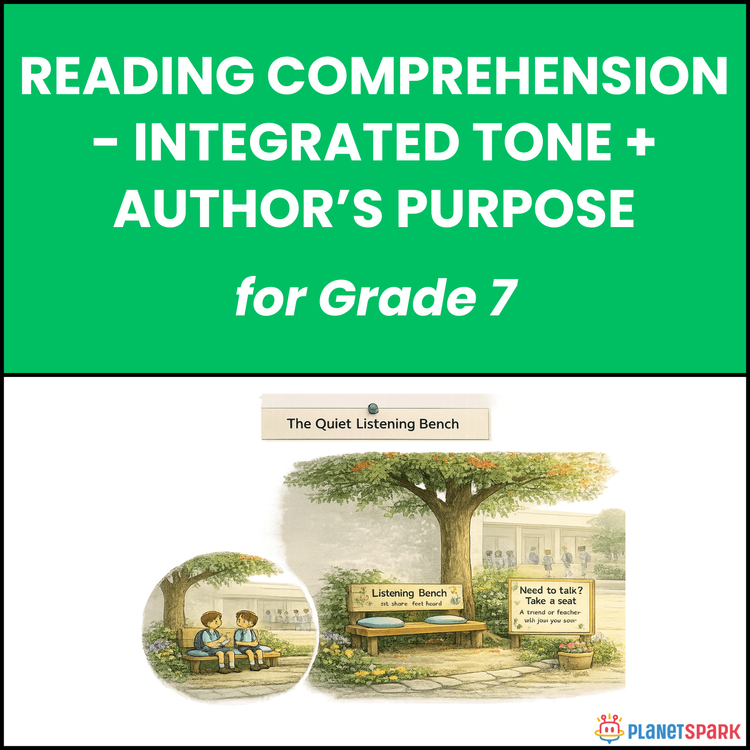
Class 7 English Worksheet on Tone and Purpose
Master Integrated Tone and Author’s Purpose: Grade 7 Reading Comprehension Worksheet
This Grade 7 worksheet is designed to help students develop strong reading comprehension skills by understanding tone, mood, and the author’s purpose in a passage. With a variety of engaging exercises, this worksheet provides essential practice for young learners.
In this worksheet, students will focus on how authors create emotional meaning and purpose through setting, dialogue, and character actions, with activities such as:
✔️ Multiple choice questions to identify tone, purpose, and the best supporting idea from the story.
✔️ Fill-in-the-blank exercises using important words from the passage.
✔️ True/False statements to test understanding of emotional meaning and author intent.
✔️ Sentence completion to explain ideas using textual support.
✔️ Paragraph completion to strengthen tone analysis and author’s purpose understanding.
This worksheet helps students understand how listening, kindness, and emotional safety shape the message of a story, improving comprehension, critical thinking, and literary interpretation.
Perfect for strengthening core English reading skills in a fun, structured, and practical way!
🔹 Answer Key (for parents and educators)
Exercise 1 – Choose the Best Answer:
1. a) He wanted students to feel heard.
2. c) They thought students would solve problems alone.
3. a) Being heard can make feelings lighter.
4. c) They could reduce the project cost.
5. b) He offered small cushions.
6. c) Students worked together.
7. a) She liked the practical and caring plan.
8. b) Enough shade and a quiet corner.
9. b) Listening and kindness build stronger connections.
10. b) It made students feel safe and invited.
Exercise 2 – Fill in the Blanks:
1. listening
2. shade
3. sign
4. cushions
5. teacher
6. Thursday
7. feelings
8. kindness
9. quiet
10. bench
Exercise 3 – True or False:
1. False
2. True
3. True
4. False
5. True
6. True
7. False
8. True
9. False
10. False
Exercise 4 – Complete Each Sentence:
1. Ayaan suggested the Listening Bench because he wanted students to feel heard, calm, and less alone during difficult school days.
2. Sara supported the plan by suggesting a welcome sign with kind words and asking the art club to help paint it.
3. Ayaan remembered his sister’s words because he understood that being heard can make heavy feelings lighter and kindness grows through honest conversations.
4. Some students doubted the idea because they thought students preferred solving problems on their own and would not use the bench.
5. Old wooden boards were useful because they reduced the project cost and reused available materials instead of buying new signs.
6. Mrs Khanna helped by liking the idea and asking them to prepare a simple plan for the Listening Bench.
7. Rohan offered help after he listened carefully and brought small cushions from home to make the bench more comfortable.
8. The welcome sign helped students feel safe, welcome, and comfortable enough to sit and talk.
9. Students started using the bench when it became a class effort and everyone supported the idea peacefully every week.
10. Students learned the value of listening because they saw that being heard helped people feel calmer and improved friendships.
Exercise 5 – Complete the Passage:
1. students
2. Listening
3. shade
4. corner
5. sign
6. cushions
7. teacher
8. Thursday
9. feelings
10. bench
Help your child strengthen tone analysis and author’s purpose understanding while building confidence in evidence-based reading.
Book a free trial!
Frequently Asked Questions
They help students understand how writers express feelings and why they wrote the passage, improving reading comprehension skills.
Tone shows the writer’s attitude, while purpose explains the reason for writing, giving students a fuller understanding of the text.
They should ask if the writer wants to inform, persuade, entertain, or explain while noticing word choice and examples.