
Class 7 Grammar Worksheet on Narrative Pacing Skills

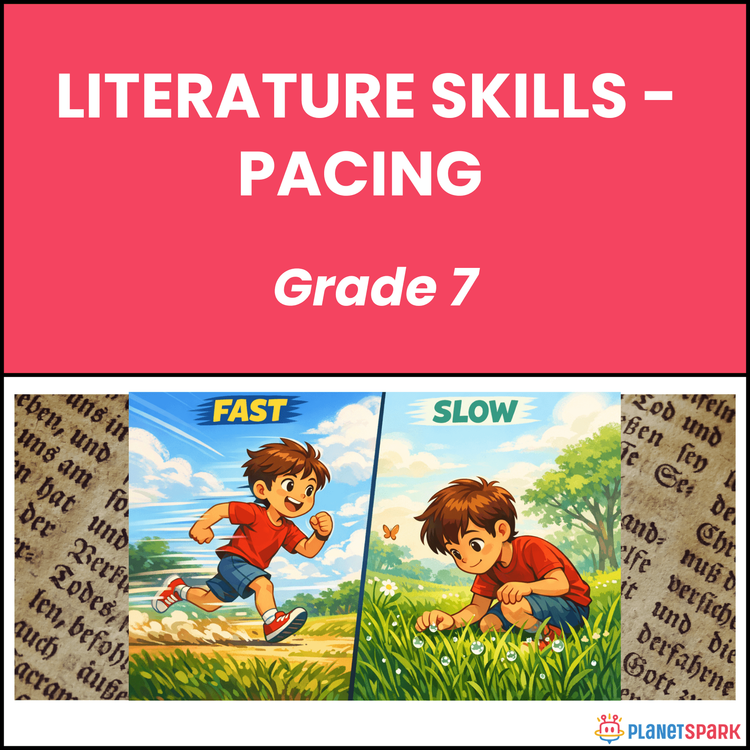
Class 7 Grammar Worksheet on Narrative Pacing Skills
Speed and Stillness: Mastering Narrative Pacing for Class 7
This Grade 7 literature skills worksheet helps learners explore how pacing shapes storytelling. Students practice identifying fast and slow pacing in multiple-choice questions, completing fill-in-the-blank tasks with pacing terms, judging statements in true/false exercises, underlining fast pacing and circling slow pacing clues in sentences, and analyzing a passage to identify pacing techniques. These varied activities build narrative awareness, reading fluency, and critical thinking in CBSE/IB English classrooms.
Why Pacing Matters in Literature?
1. It controls the rhythm and flow of a story.
2. It teaches students how short sentences, action verbs, and dialogue create urgency.
3. It shows how long descriptions, inner thoughts, and setting details slow down the narrative.
4. It helps learners connect pacing choices to reader engagement and suspense.
What’s Inside This Worksheet?
🧠 Exercise 1 – Multiple Choice Questions
Students identify fast vs slow pacing techniques.
✏️ Exercise 2 – Fill in the Blanks
Learners complete sentences using pacing-related terms.
✔️ Exercise 3 – True or False
Students judge statements about pacing in stories.
🔄 Exercise 4 – Underline & Circle
Learners underline fast pacing and circle slow pacing clues in sentences.
📝 Exercise 5 – Passage Analysis
Students identify pacing techniques in a short narrative passage.
✅ Answer Key (For Parents & Educators)
Exercise 1 – Multiple Choice
1. c) short sentences
2. b) pacing term
3. a) long description
4. c) long description
5. c) dialogue
6. a) short sentences
7. c) inner thought
8. b) short sentences
9. a) setting detail
10. a) short sentences
Exercise 2 – Fill in the Blanks
1. pacing term
2. brief / speed
3. slow pacing
4. conversation
5. long description
6. short sentences
7. action verb
8. mind
9. place / setting details
10. detailed text
Exercise 3 – True or False
1. True
2. False
3. False
4. True
5. True
6. False
7. False
8. True
9. True
10. False
Exercise 4 – Underline Fast Pacing / Circle Slow Pacing
1. Fast pacing: ran fast, jumped, reached quickly
2. Slow pacing: long road stretched endlessly, quiet trees
3. Slow pacing: described every small detail
4. Fast pacing: ball flew, hit, bounced fast
5. Slow pacing: calm lake, slow moving clouds
6. Fast pacing: rushed, slipped, stood, ran again
7. Slow pacing: old house stood silently, dusty windows
8. Fast pacing: runner dashed forward, crossed finish line
9. Slow pacing: evening sky changed slowly, fading sunlight
10. Slow pacing: explained step by step in detail
Exercise 5 – Passage Analysis
Slow pacing: waiting nervously, minutes stretched endlessly, heartbeat thudding, imagined race repeatedly.
Fast pacing: whistle blew, ran, jumped, pushed ahead quickly, legs pumped furiously, track flashing beneath him.
Help your child master narrative pacing and storytelling with engaging Class 7 practice.
Frequently Asked Questions
Narrative pacing refers to the speed at which a story unfolds, helping students control action and detail to keep readers engaged in CBSE English writing tasks.
Students can practice balancing short and long sentences, dialogue, and descriptions in a grammar worksheet designed for Class 7 English.
It helps early learners maintain reader interest by avoiding rushed or overly slow storytelling in their English worksheets.